Aerosol, Passive, or Concentrate: How to Choose the Right Air Freshener Format for Your Business
Walk into most business supply closets and you'll find cans of aerosol air freshener—the default solution purchased repeatedly without questioning whether better alternatives exist.
But familiarity doesn't equal optimal. Commercial air fresheners come in three primary formats—aerosol, passive, and concentrate—each with distinct advantages and ideal applications.
Understanding these differences helps match formats to specific needs, often reducing costs while improving odor control.
❶ Aerosol Air Fresheners: The Familiar Default
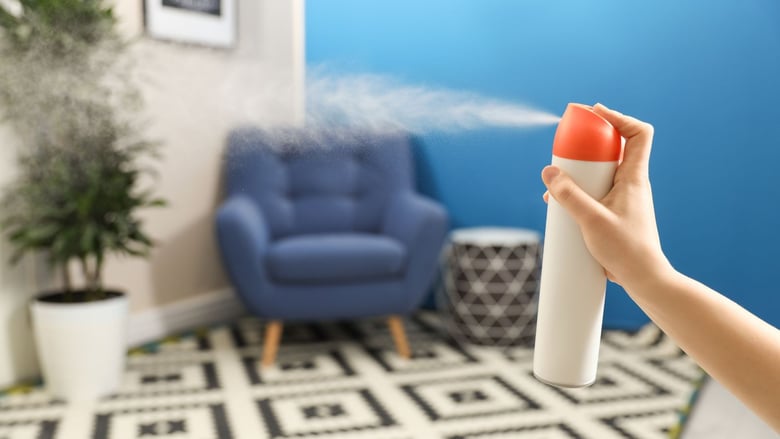
Aerosol air fresheners propel fragrance through pressurized containers, delivering immediate scent through manual spraying or automated dispensers.
✱ Advantages
- Immediate impact: Instant scent for quick odor masking.
- Portable & convenient: No installation required.
- Automated options available: Metered dispensers provide hands-free operation.
✱ Limitations
- High cost per use: Cans deplete quickly, requiring frequent replacement.
- Environmental concerns: Propellants contribute to VOC emissions.
- Waste generation: Empty cans create ongoing disposal waste.
- Inconsistent coverage: Fragrance spikes followed by dissipation.
- Masking vs. eliminating: Masks odors rather than neutralizing them.
✱ Best Applications
- Event spaces needing immediate freshening
- Low-traffic areas
- Supplemental quick-fix backup
- Small facilities with one or two restrooms
❷ Passive Air Fresheners: Continuous, Low-Maintenance
Passive air fresheners release fragrance gradually through evaporation, wicking, or gel diffusion without propellants, electricity, or batteries.
✱ Advantages
- Consistent, continuous fragrance: Steady 24/7 scent unlike aerosol's spray-and-fade cycles.
- Long-lasting: 30-60 days, dramatically reducing replacement frequency.
- Low maintenance: Install and forget for weeks.
- Cost-effective: Lower per-day cost than aerosol.
- Environmentally friendly: No propellants, no batteries, minimal waste.
✱ Limitations
- Slower odor response: Don't provide immediate odor masking.
- Fragrance intensity affected by airflow: High-ventilation areas dissipate fragrance quickly.
- Installation required: Mounting dispensers takes initial effort.
✱ Best Applications
- Restrooms with continuous traffic
- Office spaces needing subtle background freshening
- Large facilities where managing aerosol becomes burdensome
- Environmentally conscious operations
- Budget-conscious facilities
❸ Concentrate Air Freshener: Professional-Grade Flexibility
Concentrate air fresheners are liquid fragrance compounds diluted with water for use in spray bottles, mop solutions, or cleaning applications.
✱ Advantages
- Maximum cost efficiency: Lowest cost per application. One gallon yields dozens of gallons of working solution.
- Flexible dilution: Adjust concentration for different applications.
- Multi-purpose: Address odors while cleaning surfaces.
- Minimal packaging waste: One bottle replaces numerous ready-to-use containers.
- Addresses odor sources: Eliminates odor-causing residues during cleaning.
✱ Limitations
- Requires dilution and training: Staff must understand proper ratios.
- Equipment needed: Spray bottles, mop buckets, or dilution stations required.
- Labor-intensive: Manual application takes more time than automated systems.
Best Applications
- High-odor environments (gyms, pet facilities, industrial spaces)
- Integration with cleaning protocols
- Large facilities with janitorial staff
- Budget-constrained operations
Matching Format to Facility Needs
Small Office (1-2 Restrooms): Passive for continuous coverage; manual aerosol for occasional freshening.
Large Facility (10+ Restrooms): Passive primary system; concentrate supplemental during routine cleaning.
High-Traffic Restaurant/Retail: Passive in restrooms; metered aerosol in common areas; concentrate in kitchen/back-of-house.
Industrial/Manufacturing: Concentrate primary approach during regular cleaning; passive in break rooms and public areas.
Making the Right Choice for Your Business
Consider:
- Traffic level and odor intensity: High-traffic areas justify passive or concentrate investment.
- Budget: Calculate cost per day, not upfront price.
- Environmental priorities: Passive offers lightest footprint.
- Staffing: Concentrate requires training. Passive works with limited staffing.
- Maintenance capacity: Passive needs minimal attention; aerosol needs frequent replacement.
- Facility size: Larger facilities benefit from passive or concentrate efficiency.
The Bottom Line
Aerosol #AirFreshener isn't wrong—it's overused. Most facilities default to aerosol without considering whether passive would provide better continuous coverage at lower cost, or whether concentrate would address odor sources more effectively.
Match the right tool to each need:
- Passive for consistent, cost-effective continuous freshening
- Aerosol for quick-response situations
- Concentrate for addressing odor sources during cleaning
Often, the optimal approach combines formats strategically.
Air Freshener Solutions at merchants.ca
At merchants.ca, we supply Canadian facilities with air freshener formats for every application:
- Passive air freshener systems for continuous, cost-effective coverage
- Metered aerosol dispensers and refills for automated freshening
- Manual aerosol air fresheners for quick-response needs
- Air freshener concentrates for integration into cleaning protocols
Stop defaulting to aerosol. Match air freshener format to facility needs, reduce costs, and improve effectiveness.
Explore our complete air freshener selection at merchants.ca