Steel Wool, Sponges & Scouring Pads: How to Choose the Right Scrubbing Tool for Every Commercial Surface
Every facility manager and kitchen staff member has experienced the frustration: a perfectly good stainless steel surface marred by fine scratches, non-stick cookware damaged beyond repair, or stubborn grime that regular cleaning couldn't remove. These problems often stem from one simple mistake—using the wrong scrubbing tool for the surface.
Commercial #Kitchens, #Healthcare facilities, #Offices, and #Retail spaces contain diverse surfaces requiring different cleaning approaches. A #SteelWool pad aggressive enough to tackle burnt-on food on cast iron will permanently damage non-stick cookware or polished stainless steel. A soft #CommercialSponge effective for delicate surfaces won't touch heavy grease or baked-on residue on commercial equipment.
Understanding the hierarchy of abrasive #CleaningPads, steel wool options, commercial sponges, and other scrubbing tools prevents costly damage while ensuring effective cleaning. The right tool for each surface saves money on replacements, extends asset life, and delivers cleaning results matching the effort invested.
Understanding Abrasive Levels
All scrubbing tools fall somewhere on an abrasiveness scale, from ultra-gentle to extremely aggressive. Matching tool abrasiveness to surface durability is essential.
❶ Ultra-Gentle Tools
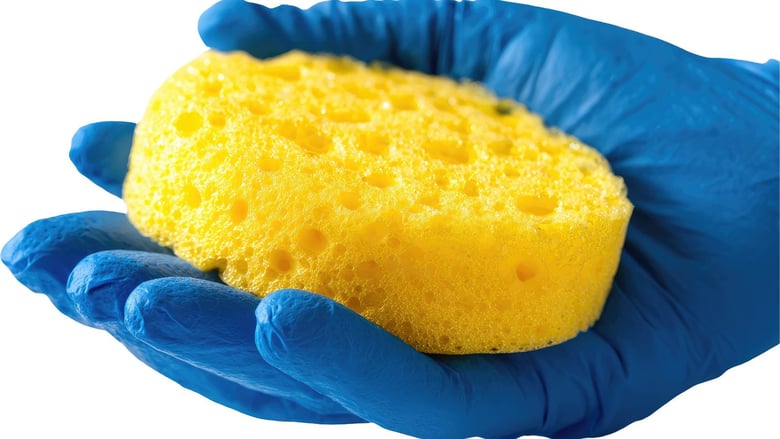
#Microfiber cloths and soft sponges provide the gentlest scrubbing action, suitable for delicate surfaces like non-stick cookware, polished aluminum, and decorative finishes.
These tools remove light soils and fingerprints without scratching. Use them for surfaces where appearance matters and abrasion causes visible damage.
Soft-sided sponges with minimal abrasive properties work well for daily maintenance cleaning of finished surfaces, glass, and mirrors.
❷ Moderate Abrasion
Multi-sided scrubbing sponges with one abrasive side and one soft side balance cleaning power with surface protection. The soft side handles delicate surfaces while the abrasive side tackles tougher soils. These versatile scouring pads work for general kitchen cleaning, bathroom fixtures, and moderate soil removal.
Fine-grit scouring pads (often labeled as "fine" or "light") provide mild abrasion suitable for stainless steel, painted surfaces, and most commercial cookware. They remove moderate soil without aggressive scratching.
❸ Heavy-Duty Abrasion
Medium-grit scouring pads tackle stubborn, baked-on soils on durable surfaces like cast iron, carbon steel cookware, and floor surfaces. These commercial scrubbing tools are aggressive enough for serious cleaning without damaging properly selected surfaces.
Coarse scouring pads and steel wool pads deliver maximum abrasive action for extreme soil removal on extremely durable surfaces. Use these only on surfaces designed to withstand aggressive scrubbing.
❹ Extreme Abrasion
Steel wool in various grades (0000 is finest, 0 is coarsest) provides maximum abrasive action, primarily for removal of rust, heavy oxidation, and extreme soil. Steel wool scratches most surfaces and should only be used on unfinished metal, cast iron, or surfaces where appearance doesn't matter.
Coarse steel wool can permanently damage stainless steel finishes and should be avoided on most commercial surfaces.
Surface-Specific Selection Guide
Stainless Steel Surfaces
Appropriate tools: Microfiber cloths, soft sponges, fine-grit scouring pads.
Why: Stainless steel scratches easily, and visible scratching undermines professional appearance. Always scrub in the direction of the grain when necessary. Avoid steel wool and coarse scouring pads that leave permanent scratches and marking.
Effective approach: For light soils, use microfiber cloths or soft sponges with appropriate cleaner. For moderate soil, use fine-grit scouring pads with gentle pressure, working along the grain direction.
Non-Stick & Aluminum Cookware
Appropriate tools: Soft sponges, microfiber cloths only.
Why: Non-stick coatings scratch easily, destroying their function. Aluminum scratches readily and can discolor. Any abrasive scrubbing tool damages these surfaces.
Effective approach: Soak cookware in hot soapy water to loosen soil, then gently wipe with soft sponges. For stubborn soil, increase soaking time rather than scrubbing harder.
Cast Iron & Carbon Steel Cookware
Appropriate tools: Medium-grit scouring pads, coarse steel wool, commercial scrubbing tools designed for heavy abrasion.
Why: These materials are designed to withstand aggressive scrubbing. Heavy abrasion removes food residue without damaging the cookware, and some scratching is expected and acceptable.
Effective approach: Use coarse scouring pads or steel wool aggressively to remove burnt-on food. Seasoning protects the surface, so appearance is secondary to function.
Tile & Grout
Appropriate tools: Medium to coarse scouring pads, stiff brushes, steel wool for grout lines.
Why: Tile is durable and stands up to aggressive scrubbing. Grout benefits from abrasive cleaning to remove embedded soil and discoloration.
Effective approach: Use appropriate abrasive pads for tile surfaces, and coarse scouring pads or steel wool specifically for grout lines where stronger abrasion removes discoloration.
Painted Surfaces & Walls
Appropriate tools: Soft sponges, fine-grit scouring pads only.
Why: Paint scratches and marks easily. Aggressive scrubbing removes paint or leaves visible damage.
Effective approach: Use soft tools and gentle pressure. For stubborn marks, increase soaking time with appropriate cleaner rather than scrubbing harder.
Mirrors & Glass
Appropriate tools: Soft cloths, microfiber cloths only—no scouring pads or steel wool.
Why: Glass scratches permanently. Even fine-grit scouring pads leave visible marks.
Effective approach: Use appropriate glass cleaner with soft cloths or microfiber cloths. Never use any scrubbing pads on glass.
Porcelain & Ceramic Fixtures
Appropriate tools: Soft to moderate scouring pads, depending on soil level.
Why: Porcelain and ceramic are relatively durable but can scratch if cleaned too aggressively. Test in inconspicuous areas before using abrasive tools.
Effective approach: Start with soft sponges for routine cleaning. For stubborn soil, progress to fine-grit scouring pads. Avoid coarse pads and steel wool.
Plastic Surfaces & Laminate
Appropriate tools: Soft sponges, fine-grit scouring pads only.
Why: Plastic scratches easily and shows wear. Aggressive scrubbing causes visible damage.
Effective approach: Use soft tools and appropriate cleaners. Avoid all steel wool and coarse scouring pads.
Common Mistakes & How to Avoid Them
Mistake ❶: Using steel wool on stainless steel. This permanently damages the finish and creates visible scratching that's difficult to repair. Always use fine-grit scouring pads or soft sponges on stainless steel.
Mistake ❷: Using scouring pads on non-stick cookware. This destroys the non-stick coating immediately. Commit to using only soft sponges on non-stick surfaces.
Mistake ❸: Using soft tools on cast iron. This leaves burnt-on residue that's difficult to remove. Cast iron requires coarse scouring pads or steel wool for effective cleaning.
Mistake ❹: Using same scrubbing tool everywhere. Different surfaces require different abrasiveness levels. Train staff on surface-specific tool selection.
Mistake ❺: Ignoring grain direction on brushed stainless steel. Always scrub along the grain. Scrubbing across the grain creates visible scratching.
Scrubbing Tool Selection Strategy
▶ Inventory approach: Stock multiple abrasiveness levels—soft sponges for delicate surfaces, moderate-grit pads for general use, and coarse pads for heavy-duty cleaning on durable surfaces.
▶ Staff training: Teach staff which tools work on which surfaces. Clearly label scrubbing tools by appropriate use (e.g., "Stainless Steel Only" on soft pads).
▶ Surface marking: Identify surfaces by material and appropriate cleaning approach. Healthcare facilities might mark equipment with cleaning instructions; restaurants might designate specific scouring tools for specific cookware.
▶ Testing protocol: Before using new scrubbing tools on valuable surfaces, test in inconspicuous areas to confirm compatibility.
The Bottom Line
Choosing the right scrubbing tool prevents costly damage while ensuring effective cleaning. Understanding abrasiveness levels, surface material characteristics, and appropriate tool-to-surface matching protects equipment and extends asset life.
The slight investment in understanding and properly selecting scrubbing tools—steel wool, sponges, and scouring pads—returns many times over through prevented damage, extended equipment life, and cleaner, more professional-looking facilities.
Train your team on these principles, stock appropriate tools for your facility's surfaces, and establish protocols ensuring consistent application. The difference between facilities where equipment lasts years and those where equipment requires premature replacement often comes down to something as simple as choosing the right scrubbing tool.
Commercial Scrubbing Tools at merchants.ca
At merchants.ca, we supply Canadian facilities with complete ranges of scrubbing tools:
- Soft sponges and microfiber cloths for delicate surfaces
- Multi-sided scrubbing sponges balancing cleaning power with surface protection
- Fine-grit scouring pads for stainless steel and moderate soil removal
- Medium and coarse scouring pads for heavy-duty commercial cleaning
- Steel wool in various grades for extreme abrasion on durable surfaces
- Specialty scrubbing tools for specific applications and surfaces
Choose the right scrubbing tool for every surface. Protect your facility's assets while achieving effective cleaning results.
Explore our complete selection of commercial scrubbing tools at merchants.ca