
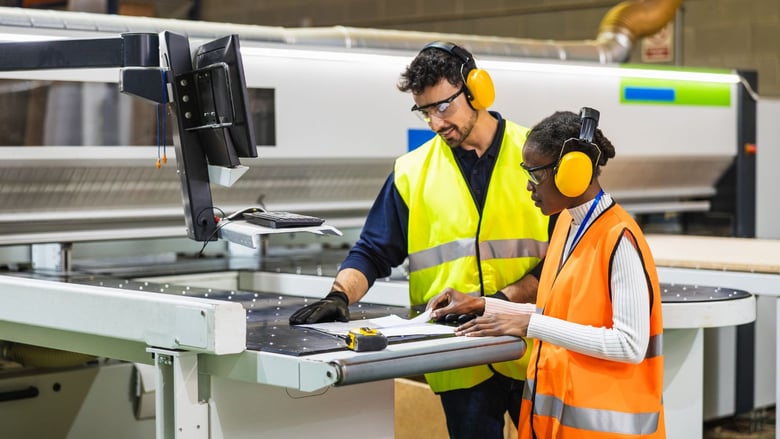
Safety First: Essential PPE for Every Manufacturing Facility
#Manufacturing environments expose workers to hazards most people never encounter. Machinery that catches fabric and skin. Airborne particles and chemical fumes. Sharp edges and hot surfaces. Each hazard demands specific protection—generic #PPE doesn't cut it.
Yet many facilities treat PPE as checkbox compliance rather than genuine worker protection. Workers wear equipment that's uncomfortable or inappropriate for tasks. When PPE feels like punishment, workers skip it or wear it incorrectly, defeating the purpose.
Effective manufacturing safety starts with understanding specific hazards, selecting appropriate PPE, and creating culture where workers actually wear it correctly. The difference between facilities with strong safety records and those with frequent injuries often comes down to PPE quality and consistency.
3 Common Manufacturing PPE Product Types
❶ Respiratory Protection: The Most Critical Investment
Manufacturing generates airborne hazards varying by industry: metal dust in machining, fumes in welding, chemical vapors in processing, silica dust in grinding.
Understanding the hierarchy:
▶ Disposable N95 respirators work for non-oil particulates (dust, pollen). Inadequate for chemical fumes or welding smoke.
▶ Reusable respirators with replaceable cartridges address specific hazards. Acid gas cartridges for chemicals. Organic vapor cartridges for solvents. P100 cartridges for fine particulates. The cartridge type determines protection.
Supplied air respirators deliver clean air through hoses for extreme hazards or confined spaces.
Critical detail: Respirators only protect when properly fitted. A loose respirator is decoration. Facilities must conduct annual fit testing ensuring each worker's respirator seals correctly.
A welding plant faces fume exposure requiring organic vapor cartridges plus P100 particulate protection—a combination respirator. Workers in dusty assembly might use disposable N95s. Workers handling strong solvents need supplied air.
Hazard assessment determines appropriate type. Generic "everyone gets the same mask" misses the mark.
❷ Cut-Resistant Gloves: Preventing the Most Common Injury
Manufacturing injuries involving cuts and lacerations account for thousands of lost-time injuries annually. Most involve machinery or sharp edges.
Standard work #Gloves provide minimal protection. Cut-resistant gloves use materials specifically engineered to resist blade penetration: high-strength polyethylene fibers, steel wire, or aramid materials.
Cut-resistant ratings use standardized testing (ANSI A1-A9 scale). A1 resists minimal cutting. A9 resists severe cutting. Selection depends on actual hazards.
Key tradeoff: Cut resistance and dexterity are opposing. Maximum protection means thicker gloves reducing fine motor control. Facilities must balance protection against task requirements.
A machining facility handling sharp edges needs A6-A8 resistance. An assembly operation with moderate risk uses A3-A4. Choosing appropriate level prevents both inadequate protection and unnecessary restriction.
Beyond cutting: Specialized gloves address other hazards—heat-resistant for hot parts, chemical-resistant for solvents, anti-vibration for impact tools. Facilities need glove variety, not one-size-fits-all.
❸ Safety Glasses: Protecting Vision Through Specialized Coatings
Eye injuries range from minor (particle in eye) to catastrophic (permanent vision loss). #SafetyGlasses are non-negotiable, but not all protect equally.
Standard safety glasses resist impact from flying debris but are inadequate for specialized tasks.
Welding-specific lenses block ultraviolet and infrared radiation from welding arcs. Standard safety glasses provide zero protection—workers wearing them during welding face arc eye (painful corneal burns).
Chemical splash protection requires glasses with side shields preventing liquid from entering at angles. Standard lenses miss side splash.
Anti-scratch coatings extend lens life in dusty environments. Without them, lenses cloud after weeks of use.
Anti-fog coatings prevent fogging in humid environments. Fogged lenses create visibility problems making workers remove glasses.
A facility with welding needs welding-specific protection. A chemical area needs splash-resistant glasses with side shields. A grinding station needs impact-resistant with anti-scratch coating.
Generic "safety glasses" might technically meet standards while providing inadequate actual protection.
Beyond Individual PPE: Systems & Culture
Selecting appropriate PPE is half the battle. Ensuring workers wear it correctly is the other half.
▶ Fit and comfort matter. Uncomfortable PPE gets removed. Quality, comfortable options workers will actually wear beats cheaper equipment they avoid.
▶ Storage and accessibility matter. Workers can't wear PPE locked in cabinets. Accessible storage drives compliance.
▶ Training matters. Workers must understand why specific PPE is required. "This respirator protects against metal fumes you're exposed to" motivates compliance better than "because rules."
▶ Enforcement matters. Facilities with strong safety cultures enforce PPE consistently. No exceptions. No shortcuts.
▶ Replacement matters. Damaged or worn PPE provides false security. Establish replacement schedules ensuring functional equipment.
Real-World Manufacturing Safety Scenarios
▶ Precision machining shop handling titanium and aluminum:
- Respirators with P100 cartridges for metal dust
- Cut-resistant gloves (A5+) for chip handling
- Impact-resistant safety glasses with anti-scratch coating
- Hearing protection
▶ Welding operation:
- Respirators with organic vapor cartridges
- Heat-resistant gloves for hot materials
- Welding-specific eye protection
- Protective clothing preventing burns
▶ Chemical processing facility:
- Supplied air respirators
- Chemical-resistant gloves
- Splash-resistant glasses with side shields
- Full-body protective clothing
One-size-fits-all PPE fails in all scenarios.
Manufacturing PPE at merchants.ca
At merchants.ca, we supply Canadian manufacturing facilities with comprehensive PPE:
- Respirators including disposable, reusable, and supplied air systems
- Respiratory cartridges for specific hazard types
- Cut-resistant gloves in various ratings
- Heat-resistant and chemical-resistant gloves
- Safety glasses with specialized coatings
- Welding helmets and eye protection
- Protective clothing including aprons and full-body protection
- Fit testing supplies for respiratory program compliance
Manufacturing safety isn't generic. Hazards are specific. Protection must match hazards. Workers deserve equipment protecting them without unnecessary discomfort.
The difference between facilities with strong safety records and those with frequent injuries often comes down to PPE quality and consistent use.
Safety first starts with understanding specific hazards and selecting specific protection.
Explore comprehensive manufacturing PPE at merchants.ca

Comments (0)
Join the conversation
Be the first to share your thoughts on this post
No comments yet
Start the discussion and be the first to comment